
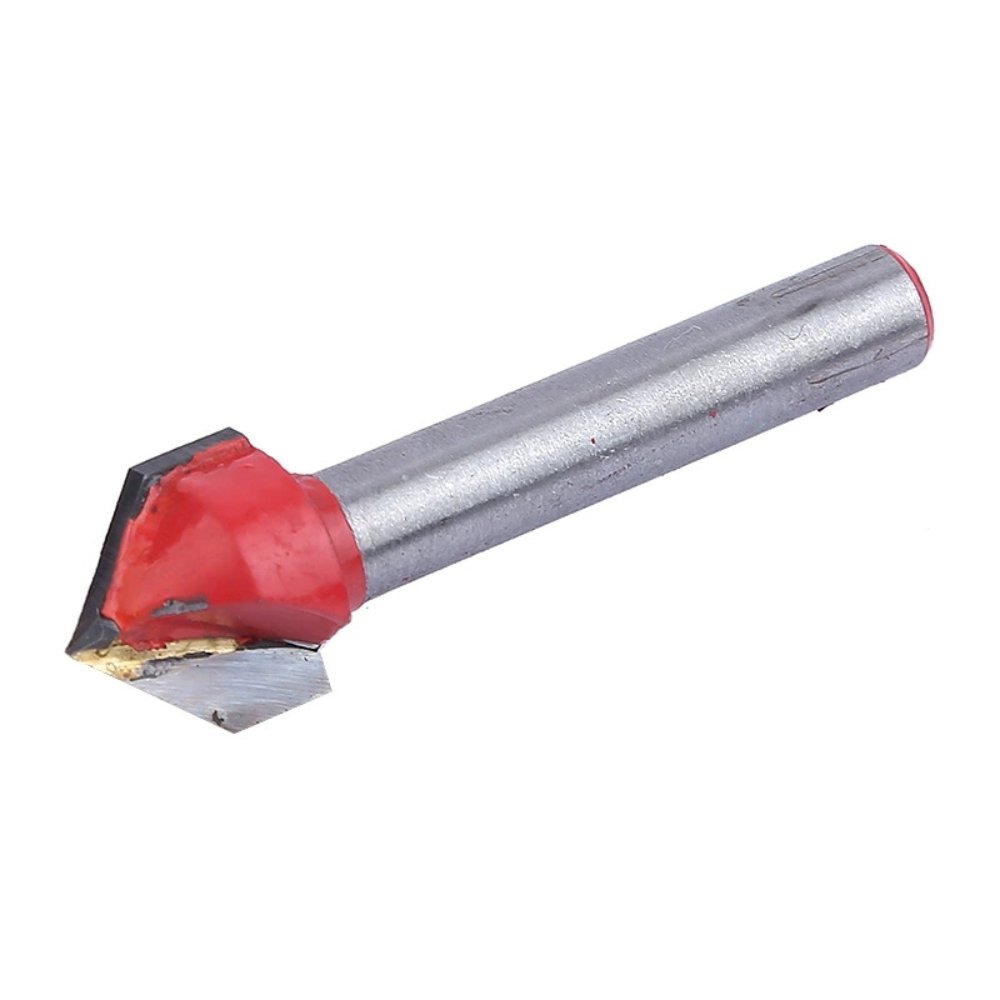
V-Groove Bit RFQs: Ask for Material Details
For a V-groove router-bit material enquiry, ask the supplier to identify the material of the cutting area and the tool body for the exact quoted item. Keep any grade, surface-treatment description and supporting document in separate fields, and link the answers to the same tool reference before comparing proposals.
Complete-tool catalogue view reused from verified source bytes; its original URL remains in the current official gallery. The head and shank are visual reference areas, not verified material grades.
Ask for the material behind the quoted tool
Success Drill’s Woodworking V-Groove Router Bits listing provides model text and dimensional fields, but the inspected product description does not name a material grade, hardness value or surface treatment. A buyer comparing wholesale woodworking router bits therefore needs a material response for the proposed item before treating two quotations as equivalent.
Begin with the actual product link and the supplier’s item reference. Ask the supplier to identify the proposed material construction in its own terms, then clarify the areas those terms describe. This keeps a familiar tool shape or a broad word such as “premium” from becoming an unstated material specification in the order.
Separate the cutting area from the tool body
Use an overall image to identify the head, shank and cutting areas that need explanation. Ask which material description applies to each relevant area. If the supplier proposes one material throughout, request that scope explicitly. If it describes different materials for different parts, retain those descriptions as separate fields rather than compressing them into one generic material name.
A close photograph can help locate the question. It cannot reliably supply a material grade or identify the reason for a visible colour difference. Avoid naming a construction method from appearance alone. Instead, ask the supplier to explain the proposed construction and refer to the same marked areas in its answer.
Identify the exact quoted item rather than the product family alone.
Name the cutting area and the body or shank scope separately.
Request the supplier’s material and grade descriptions without filling missing values.
Retain any unresolved component scope beside the response.
Close gallery view helps locate the area for a supplier material question. Surface colour, joins and visible edges do not establish composition or a treatment specification.
Keep grade and surface description distinct
When the supplier gives a material name, ask whether a specific grade is being proposed and how that grade is identified. A commercial description may be useful for locating a proposal while still requiring clarification before technical comparison. Do not translate it into a standard designation unless the supplier provides the mapping and the responsible reviewer accepts it.
The catalogue shows red-coloured areas and exposed-looking surfaces. Keep that visible appearance separate from a treatment claim. Ask whether any coating, finish or other surface description is part of the quotation and which area it covers. Record the answer as supplied; the photograph does not establish a treatment’s chemistry, thickness or function.
Build a component-scoped material enquiry
The table below is a purchasing request format, not a completed Success Drill specification. Leave the response fields open until the supplier answers. This is more useful than requiring a yes-or-no response to an assumed grade that may not describe the actual proposal.
Field
Question
Reference to retain
Cutting area
What material and grade are proposed here?
Marked area and supplier description
Body and shank
Which description covers these parts?
Named component scope
Surface
Is a treatment part of the proposal?
Type as declared and covered area
Supporting record
What document supports the stated material?
Document identity and represented item
Related tool examples from the same official gallery. Their grouped appearance is not a supplied set or proof that every displayed tool uses identical materials.
Connect documents to the proposal
Ask what supporting material information is available for the quoted construction. If a document is provided, identify its issuer, date and reference, and ask how it connects to the proposed tool or material. Preserve the document’s actual scope. A record for a different material, unspecified item or unrelated batch should lead to a clarification request rather than an automatic match.
If a hardness value or another measured property is important to the purchase, request the value together with its method, location and represented material. Do not add a numerical requirement merely because it appears in another supplier’s catalogue. The buyer’s technical reviewer should define the needed comparison and assess the actual response.
Compare the answers before comparing claims
Place the supplier responses beside one another using the same component fields. Two quotations may describe the same visible tool shape while proposing different material scopes or leaving different questions open. Keep an unanswered grade or treatment field visible instead of interpreting the lowest price as a like-for-like material offer.
Material identification is also separate from cutting performance and equipment suitability. This enquiry does not prescribe operating settings or establish a service life. Once the material questions are resolved, retain the accepted descriptions with the tool and quotation references. Send the component questions and requested supporting records through the Success Drill contact page.
V-groove bit material questions
Can the red appearance identify a coating?
It identifies a visible catalogue feature only. Ask the supplier whether a treatment is proposed and which area it covers before recording a coating specification.
Does one material name necessarily cover the whole tool?
Ask for the scope. Retain separate descriptions when the supplier identifies different materials for the cutting area, body or another named part.
Does a material document prove cutting life?
Keep the document limited to its actual subject and represented item. Any required cutting-performance evaluation needs its own defined scope and responsible review.
V-Groove Router BitsMaterial EnquiryTool Sourcing