
Router Bit RFQs: Identify the Retail Artwork File
For a V-Groove router-bit retail-artwork RFQ, ask whether the manufacturer proposes an applicable text, layout or artwork reference for the actual tool offer. Request its identifier, revision and stated product or retail-pack scope if provided. Connect the file to the sample and quotation. Keep document availability separate from any printing or physical-label proposal; a cutting-tool advertisement is not an accepted retail master.
A tool quotation may have a model designation and catalogue picture while the proposed retail document remains unidentified. A focused file request gives the manufacturer a specific question to answer. It helps a buyer distinguish the reference proposed for the actual offer from artwork or promotional language associated with a broader collection of cutting tools.
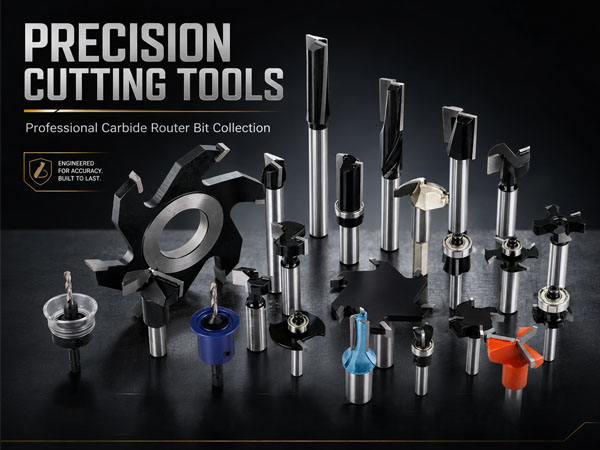
Separate cutting-tool catalogue advertising collection. Printed precision, carbide, accuracy and durability wording is not independently verified, and the collection does not establish the quoted V-Groove SKU, a supplied assortment or available retail files.
Tie the inquiry to the exact V-Groove offer
Start with the linked Woodworking V-Groove Router Bits catalogue product and request the manufacturer model or version used in the quotation. Retain the commercial line reference beside the retail-file inquiry. If the supplier uses different designations on a sample and an offer, ask it to explain which actual version the proposed file represents.
The cutting-tool advertising collection above is a separate category presentation. It does not identify one quoted V-Groove model or a supplied assortment. Its visible precision, material or durability wording should not be carried into the purchasing record as independently established facts about the tool under discussion.
Ask which reference file the manufacturer proposes
Request the supplier response on whether it provides retail product text, an artwork master, a layout reference or another applicable document for the identified offer. If a file is proposed, ask for its title or identifier and revision. If no applicable file is supplied, retain that response rather than adopting an advertisement from another tool.
Keep the request distinct from the manufacturer accepted proposal. An inquiry for artwork does not establish its existence or availability. Where a supplier refers to a general catalogue file, ask how that reference applies to the actual product version and to the retail presentation, if any, described in the quotation.
Buying field
Requested supplier response
Tool reference
Manufacturer designation and version of the actual V-Groove offer.
Commercial line
Quotation line associated with the document request.
File status
Supplier response on whether an applicable reference is provided.
Document identity
Actual text, artwork or layout identifier and revision, if supplied.
Stated scope
Manufacturer explanation of the product or proposed retail-pack presentation covered.
Text relationship
Identified text version associated with the proposed artwork.
Sample relationship
Actual sample and the version represented by that sample.
Physical-item status
Separate commercial response if printed items or services are discussed.
Separate cutting-tool category reference. These different tools do not identify the quoted V-Groove version, a supplied set, material grades, storage conditions or performance.
Clarify product and proposed pack applicability
Ask the manufacturer whether its file describes the actual tool, a proposed retail-pack presentation or another stated purpose. Retain those scope distinctions beside the file identifier. If several versions are proposed, request the product reference associated with each rather than applying the same layout to every tool in a catalogue family.
The black-background tool grouping above is another category reference. The different tools do not establish a supplied set, common material grade or shared product specifications. Their appearance can locate a general catalogue discussion while the actual manufacturer response identifies which offer a proposed retail reference concerns.
Keep text and artwork revisions linked
If the supplier proposes both text and artwork files, request the identifier and revision of each. Ask which text version is incorporated into the artwork and keep that relationship with the product reference. Where a language alternative is discussed, request its associated source version so that similarly named files remain distinguishable.
If a replacement file is supplied, ask which earlier reference it replaces. Retain the manufacturer response instead of silently combining text from one revision with a layout from another. A familiar tool picture or file name does not confirm that the wording and artwork apply to the same actual offer.
Actual V-Groove Router Bit catalogue appearance reference. The head and shank do not establish material grades, performance, storage conditions, document availability or a supplied set.
Use the actual tool image as an identity reference
The complete V-Groove router-bit image above is a catalogue appearance reference for this inquiry. It helps identify the product discussion but does not establish a material grade, product effect or document availability. Ask the manufacturer to connect its proposed file to the actual offered model and sample.
Keep retail-file identity separate from the dimensional drawing, component-material declaration and operating-data record. Those documents address other questions. The retail-file request should not invent tool dimensions, speed limits, rotation directions, safety wording or operating instructions to fill gaps in the manufacturer proposal.
Separate the document from printed-item supply
If physical labels, printed packs or a printing service are discussed, request their actual commercial status separately from the file. Retain whether each item is included, separately proposed, excluded or unresolved for the quotation. Receiving an artwork reference alone does not confirm the supply of a physical item or a customisation service.
Ask which document revision corresponds to any actual printed-item proposal. Keep that relationship with the commercial line and sample. Do not assume a barcode, mandatory statement, printing method or brand permission from a catalogue mark; retain the manufacturer actual proposal without adding conclusions that the file reference does not establish.
Reconcile the sample, file and quotation
Compare the tool designation, file identifier, revision and stated presentation scope across the manufacturer response. Request clarification where a sample code and quotation reference do not match. Retain any supplier explanation or limitation before recording a file as the accepted reference for the offer.
This action differs from identifying mixed-variant cartons in a warehouse. A warehouse identification record can locate commercial units, while a retail-artwork reference identifies the proposed document and its version. Keep those purposes separate so that a packing map is not treated as the actual retail master and a retail file is not mistaken for a confirmed supplied assortment.
Preserve a clear reference for revised offers
For a repeat or revised quotation, cite the accepted file identifier and ask whether it remains applicable to the actual tool version now proposed. If the manufacturer provides a replacement, retain its relationship to the earlier document and the offer affected by the change.
Keeping the product, sample and document references together makes later questions specific without assuming permanent file availability, printing services or a performance result. Record what the manufacturer has actually proposed and keep unanswered scope questions visible instead of completing them from unrelated promotional material.
Buyer FAQ
Does a cutting-tool advertisement provide an accepted retail master?
No. Ask the manufacturer actual reference and its applicability to the quoted model.
Does an artwork file mean physical labels or printing are included?
Ask for a separate commercial response for any physical item or service.
Can one file be assigned to every pictured router bit?
Request the actual product-version scope of each proposed file.
What belongs with the accepted retail reference?
Retain the file identity and revision, stated scope, tool and sample relationship, and quotation line.
Identify the Woodworking V-Groove Router Bits catalogue reference, distinguish broader cutting-tool category presentations and request the actual artwork reference through the manufacturer contact page.
Identify the actual tool offer and proposed document status.
Request the file identity, revision and stated presentation scope.
Retain the accepted reference with the sample and quotation.
v groove router bit retail artwork reference fileB2B supplier sample record